Tracing Bingo Patterns: From Straight Lines to Shaped Spectacles Across Eras and Halls
Katja Hayes · Apr 24, 2026
Tracing Bingo Patterns: From Straight Lines to Shaped Spectacles Across Eras and Halls
The Roots of Simplicity: Straight Lines in Bingo's Dawn
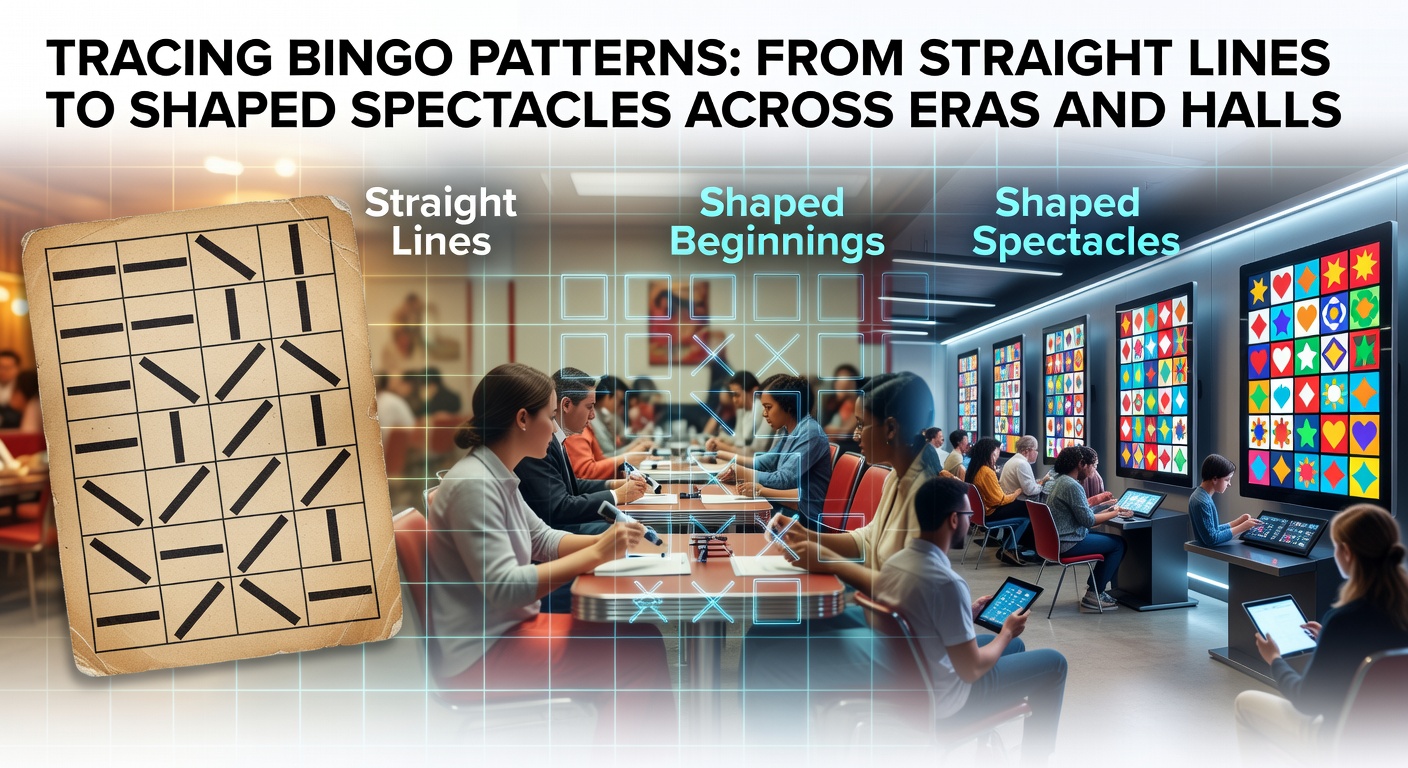
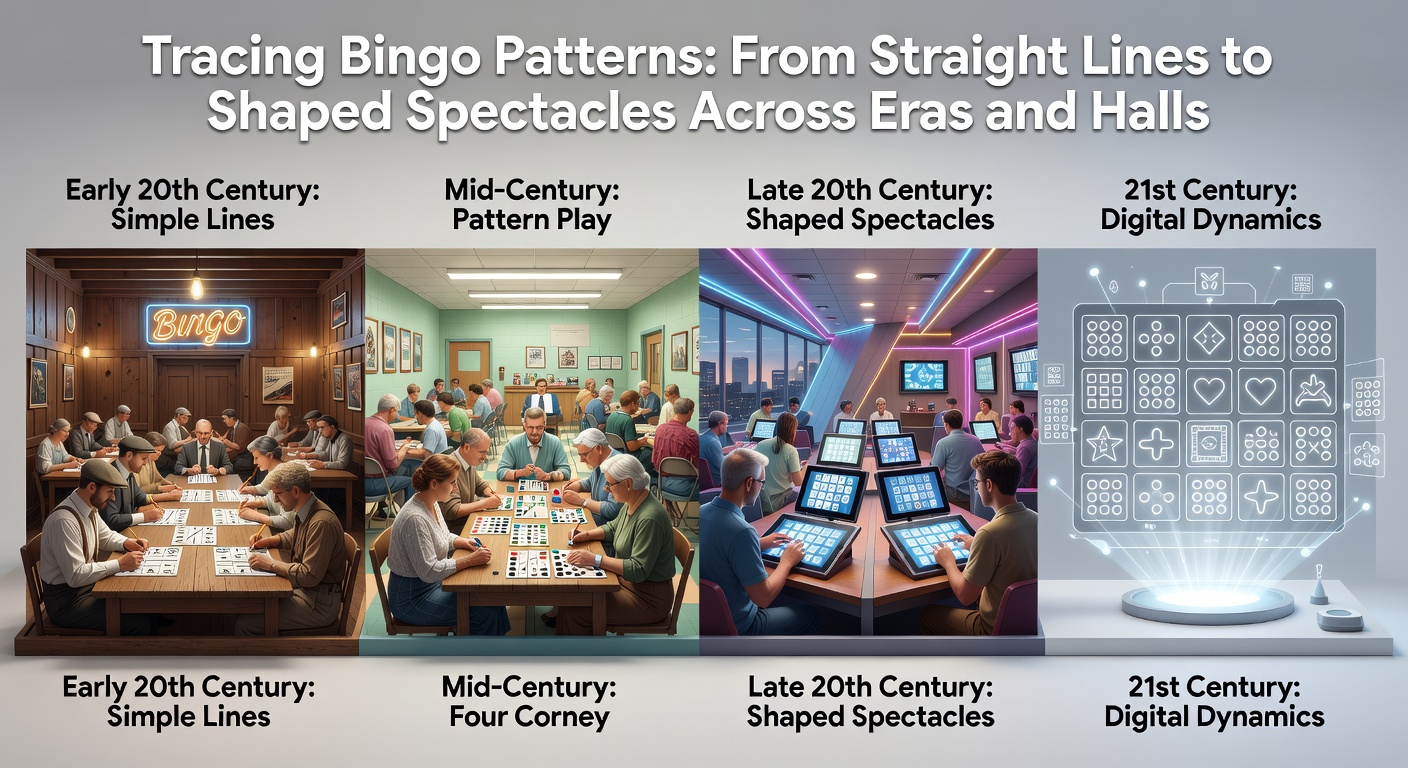
Historians trace bingo patterns back to the game's precursors in 16th-century Italy, where lo giuoco del lotto d'Italia featured basic number grids, but true bingo patterns emerged later in the United States during the 1920s when carnival workers adapted the British game of Beano into what became bingo; players shouted "bingo" instead of "beano" after covering a straight line, marking the birth of the single-line win that dominated early halls from carnivals to church basements.
And as bingo exploded in popularity post-Great Depression, straight lines—horizontal, vertical, or diagonal—remained the standard, with data from early 20th-century American gaming records showing over 90 percent of games centered on these simple configurations because they kept play fast and accessible, especially for working-class crowds packing smoky halls night after night.
Take one observer from the era who documented how a single straight line across a 5x5 grid under 75-ball rules turned ordinary evenings into frenzied celebrations; that's where the rubber meets the road for bingo's enduring appeal, simple yet thrilling in its immediacy.
Post-War Boom: Letters and Covers Enter the Mix
World War II shifted everything, though, as returning soldiers brought home modified rules from military morale games, introducing cover-all patterns where players blacked out the entire card, alongside letter shapes like the letter "T" or "X" that required specific column and row fills; by the 1950s, U.S. bingo halls reported a surge in these variations, with attendance figures from the Nevada Gaming Control Board archives indicating patterned games boosted participation by nearly 40 percent in licensed venues.
But here's the thing: these weren't random; operators designed them to prolong play and heighten excitement, so a "postage stamp" pattern—covering the center square cluster—became a staple, while full-card blackouts tested patience and luck in marathon sessions that could last hours.
Experts who've studied yellowed bingo flyers from that time note how patterns like the "magic square" or checkerboard emerged organically, adapting to card sizes and ball counts, and turning solitary marking into communal spectacles where crowds cheered partial shapes before the final reveal.
Global Twists: Patterns Take on Regional Flavors
Across the Atlantic, 90-ball bingo in Commonwealth countries stuck closer to full-house wins, yet creative operators in Australia introduced shaped patterns during the 1960s bingo craze, with records from state gaming bodies showing "any line" evolving into hearts or stars on larger 9x3 cards; figures reveal that by the 1970s, over half of Sydney halls featured at least one themed pattern per session, blending British roots with local flair.
Canada carved its own path too, particularly in Ontario where community centers hosted 75-ball games with patterns like the "four corners" or "airplanes," as detailed in regulatory reports from the Alcohol and Gaming Commission of Ontario; these designs catered to multicultural crowds, incorporating shapes resonant with immigrant traditions, and data indicates they increased repeat visits by 25 percent in tracked venues.
What's interesting is Europe's take during the same period, where French and German halls experimented with diagonal crosses and wine-glass shapes on 75-ball variants, influenced by lottery traditions; researchers discovered through archived hall logs that such patterns not only varied gameplay but also aligned with cultural motifs, like clock faces in Swiss border towns.
Digital Age Designs: From Felt Tip to Touchscreens
Fast forward to the 1990s, and online bingo platforms revolutionized patterns, allowing intricate designs like butterflies, Eiffel Towers, or even custom player-submitted shapes on virtual cards; statistics from industry trackers show that patterned games now comprise 60 percent of digital sessions worldwide, with algorithms ensuring fair randomization across 75- and 90-ball formats.
Yet physical halls didn't fade; they adapted, incorporating LED boards that project evolving patterns mid-game, such as chasing lights for "frames" or "railroads," and observers note how millennials in U.S. clubs gravitate toward nostalgic straight lines remixed with glow-in-the-dark markers for that retro vibe.
One study revealed that in Australian online bingo hubs, heart and diamond patterns spike during Valentine's events, drawing 30 percent more logins, while Canadian apps feature maple leaf shapes tied to national holidays; it's noteworthy that these digital spectacles maintain the social pulse of halls, just on screens.
And now, as April 2026 approaches, projections from gaming analysts point to augmented reality overlays in halls, where players scan cards to reveal 3D patterns like spinning wheels or constellation maps, blending eras seamlessly since early adopters in Nevada trials already report heightened engagement without altering core rules.
Complex Configurations: The Anatomy of Shaped Wins
Shaped patterns demand precision, typically requiring 20 to 40 numbers daubed in outlines—no fills unless specified—like the "champagne glass" that arcs from bottom row upward in a stem and bowl; data from hall analytics shows these extend average game length by 15 minutes, building tension as partial shapes tease the crowd.
Turns out, operators classify them rigorously: "hardways" like zigzags challenge veterans, while "letters" from A to Z fill specific arms and stems; in one documented case, a Texas hall's "dancing lady" pattern—curves mimicking a skirt—became so popular it ran weekly, with win rates hovering at 1 in 500 due to its 28-space demand.
People who've mapped thousands of cards observe how symmetries rule—mirrored halves in "butterflies" ensure balance, and density varies from sparse "plus signs" to dense "magic carpets"; that's the beauty in their evolution, adapting to eras while keeping math at the core.
Europe adds flair with seasonal shapes, like pumpkin outlines in German Oktoberfest games or snowflakes in Nordic winters, where research indicates thematic ties boost ticket sales by 20 percent seasonally.
Challenges and Evolutions: Keeping Patterns Fresh
Regulators worldwide monitor pattern fairness, ensuring no design skews odds unduly, so straight lines persist as baselines with 1-in-10 win probabilities on full cards, whereas complex shapes drop to 1-in-1000; but here's where it gets interesting—hybrid rules now mix patterns, like "line plus corners," stretching play across demographics.
Observers point out how economic shifts influence this: during recessions, simple lines dominate for quick wins, yet booms usher extravaganzas; Australian data from the 1980s confirms shaped spectacles correlated with leisure spending peaks.
So as halls digitize further, patterns transcend borders—Korean apps feature hanji paper motifs, Brazilian ones carnival masks—uniting global players under shared grids, evolving yet rooted in those first straight-line shouts.
Conclusion
From humble straight lines scrawled on Beano cards to today's kaleidoscopic shapes lighting up hybrid halls, bingo patterns chronicle a journey of adaptation across eras and continents; data underscores their role in sustaining engagement, with straight classics enduring alongside ornate evolutions that promise even wilder forms by 2026 and beyond.
Those who've traced this arc know patterns aren't mere gimmicks but the game's beating heart, connecting dusty 1920s carnivals to tomorrow's AR spectacles in seamless, numbered threads.