Bingo's Role in Fundraising Efforts for Local Schools and Nonprofits Throughout American History
Greta Koch · May 31, 2026
Bingo's Role in Fundraising Efforts for Local Schools and Nonprofits Throughout American History
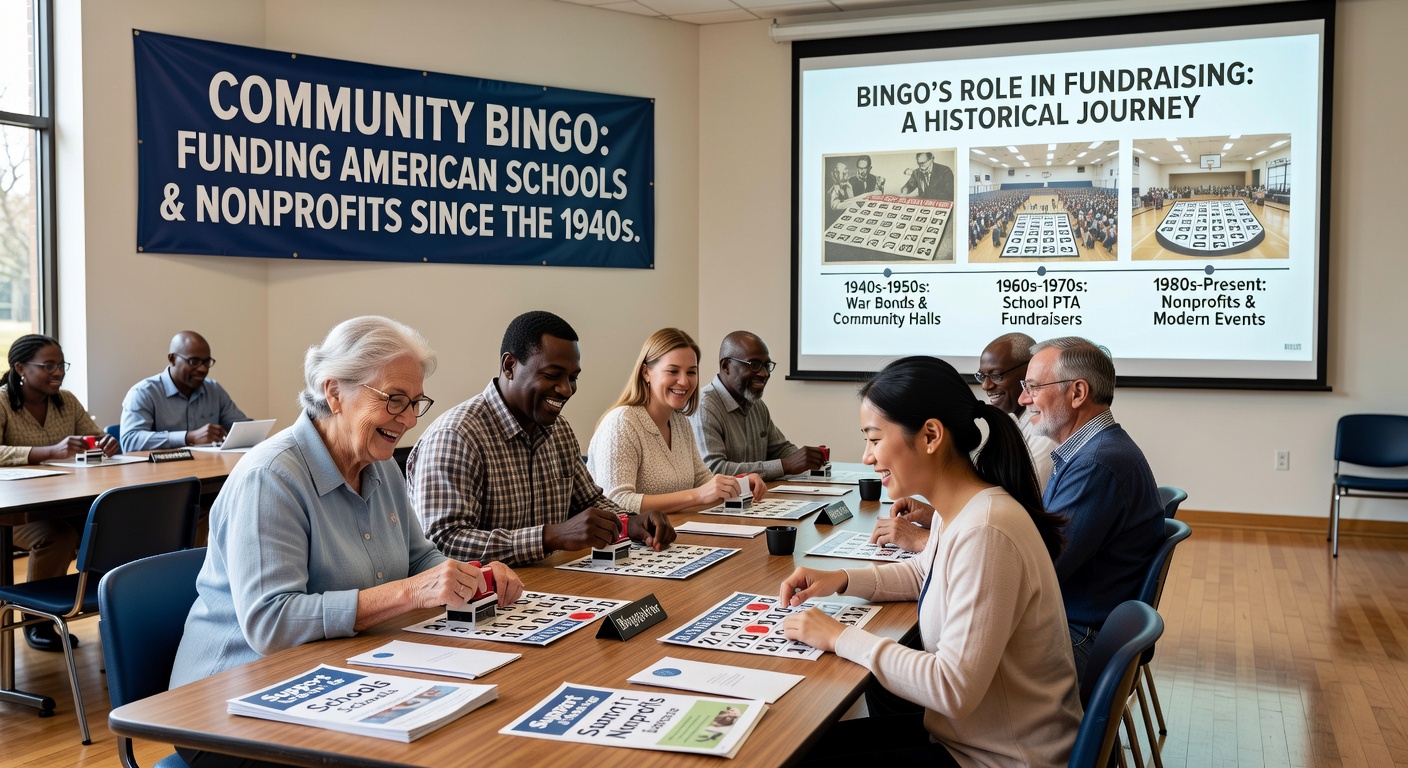
Historical records indicate bingo entered American fundraising scenes during the 1920s and 1930s when churches and community groups adapted the game from earlier European variants to raise money for local causes, and observers note that its simple format allowed quick organization at events where participants purchased cards and marked numbers called aloud. Early adopters included parent-teacher associations that hosted weekly sessions in school gymnasiums, generating revenue for textbooks and playground equipment while drawing crowds from surrounding neighborhoods.
Origins and Early Adoption in Community Settings
Archival documents reveal that bingo gained traction after a 1929 trademark filing for a similar game called Beano, which evolved into the numbered version familiar today, and researchers have documented its spread through traveling carnivals that introduced the activity to rural towns across the Midwest and South. Nonprofit organizations such as fire departments and veterans' groups soon incorporated bingo nights into their calendars because the format required minimal equipment yet produced steady income from card sales and concessions.
During the Great Depression era, records from various municipalities show that bingo events helped supplement budgets strained by economic hardship, with schools in industrial cities like Detroit and Pittsburgh relying on proceeds to maintain after-school programs. Data collected by local historical societies demonstrates that these gatherings often combined entertainment with direct appeals, encouraging repeat attendance through small prizes like household goods.
Expansion During and After World War II
World War II mobilization saw bingo integrated into broader charity drives, where proceeds supported bond sales and relief efforts for military families, and evidence from wartime newspapers indicates that community halls hosted regular sessions to sustain morale while funding essential supplies. Postwar suburban growth accelerated its use in new school districts, where parent groups organized monthly bingo to finance construction of additional classrooms and athletic fields.
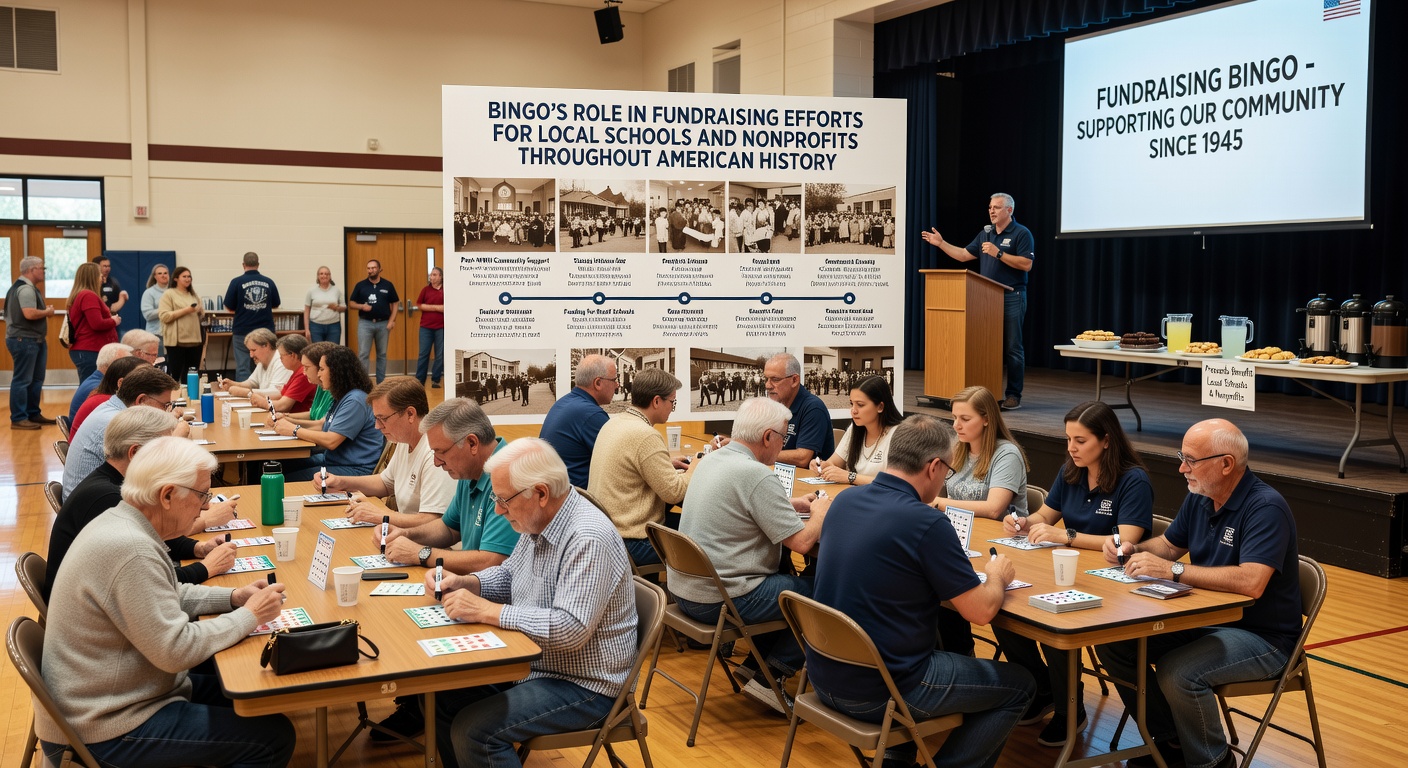
By the 1950s, state regulations began to formalize bingo operations for nonprofits, requiring licensing that distinguished charitable play from commercial gambling, and figures from regulatory filings reveal steady increases in permitted events throughout the Northeast and Midwest. Nonprofit leaders discovered that bingo appealed across age groups, fostering intergenerational participation that strengthened community ties beyond the immediate financial gains.
Integration with School and Nonprofit Strategies in Later Decades
Throughout the 1960s and 1970s, educational institutions expanded bingo programming to address shrinking public funding, with parent associations reporting consistent supplemental income for field trips and library acquisitions according to internal organizational ledgers. Nonprofits focused on health services and youth development adopted similar models, scheduling events in partnership with civic clubs to maximize attendance and diversify revenue streams.
Studies conducted by university researchers in the 1980s highlighted how bingo nights served as low-barrier entry points for volunteer involvement, allowing participants to contribute time as callers or ticket sellers while organizations tracked rising donation levels tied to event popularity. One documented case involved a Midwestern elementary school that used weekly sessions to fund a new computer lab, illustrating the direct link between game proceeds and tangible facility improvements.
Regulatory adjustments in various states during the 1990s permitted electronic variants and larger jackpots under strict charitable oversight, and reports from industry associations show these changes sustained interest amid competing entertainment options. Schools and nonprofits adapted by emphasizing themed nights and bundled ticket packages, which maintained engagement while complying with updated legal frameworks.
Contemporary Applications and Ongoing Relevance
Current practices demonstrate that bingo remains embedded in local fundraising calendars, particularly for rural schools and small nonprofits where alternative revenue sources prove limited, and data compiled by national education groups indicate continued reliance on these events for operational support. Hybrid formats combining in-person and virtual participation have emerged in recent years, expanding reach without altering the core mechanics that made the game effective historically.
According to information from the National Council of Nonprofits, bingo proceeds continue to represent a measurable portion of annual budgets for many community organizations focused on education and social services. Observers have noted parallel developments in neighboring regions where similar charitable gaming models support comparable causes, though American implementations retain distinct regulatory characteristics shaped by state-level oversight.
Conclusion
Records spanning nearly a century establish bingo as a persistent mechanism through which American schools and nonprofits have secured resources for essential programs and infrastructure, evolving alongside regulatory and technological shifts while preserving its accessibility. Patterns observed in historical and contemporary data confirm its role in fostering both financial stability and community participation across diverse geographic and demographic contexts.