Bingo Supply Chains: Mapping Material Sourcing and Manufacturing Shifts in Global Equipment Markets
Casey Perry · Aug 18, 2026
Bingo Supply Chains: Mapping Material Sourcing and Manufacturing Shifts in Global Equipment Markets
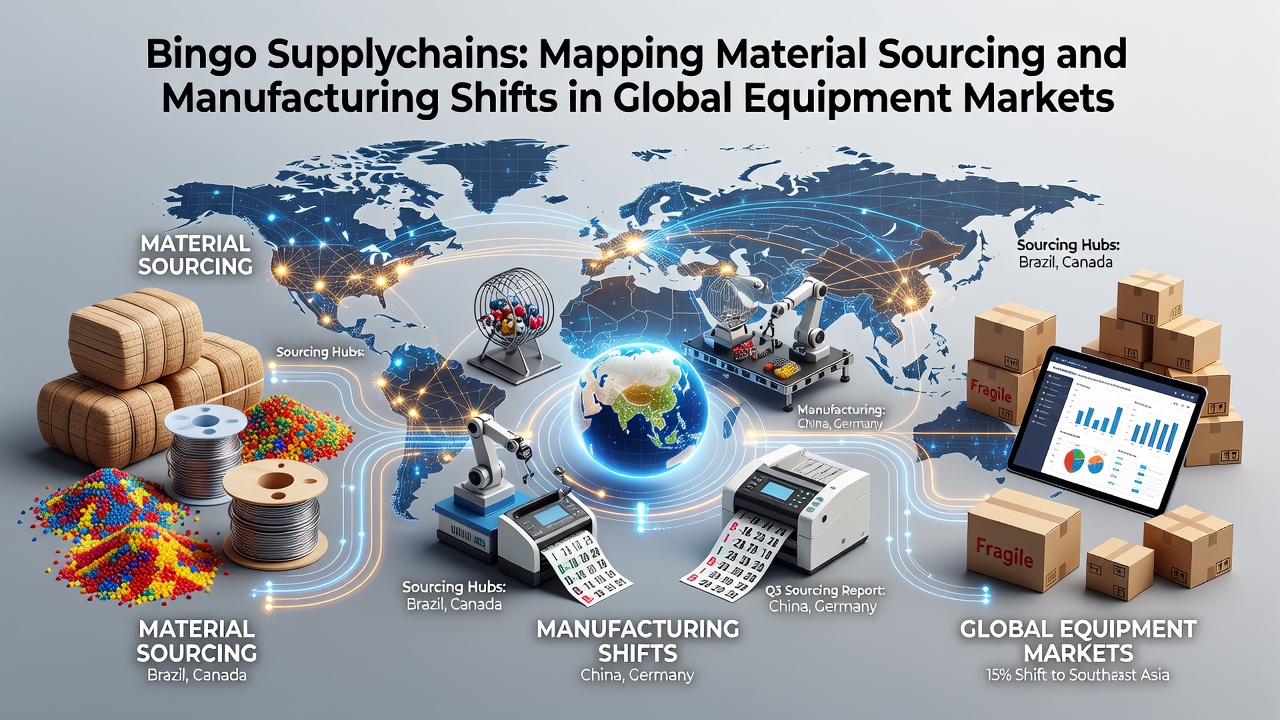
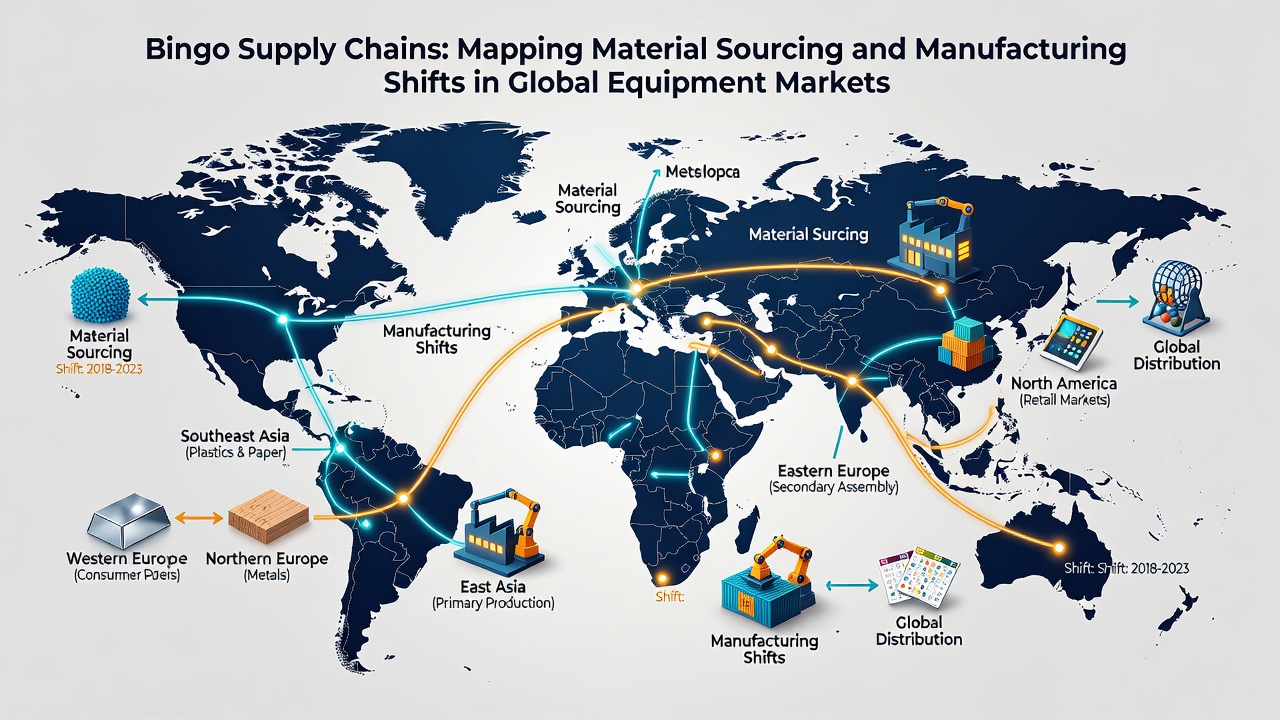
Global bingo equipment markets rely on intricate supply chains that draw raw materials from multiple continents while manufacturers adjust production locations in response to trade policies and cost pressures, and data released in August 2026 highlights continued relocation of assembly lines away from traditional hubs in China toward facilities in Vietnam, Mexico, and Eastern Europe. Plastic pellets for daubers and electronic components for digital consoles often originate from petrochemical plants in the Middle East and semiconductor fabs in Taiwan, after which these inputs travel through ports in Singapore and Rotterdam before reaching final assembly sites.
Key Raw Materials and Their Origins
Manufacturers source high-density polyethylene for bingo balls primarily from chemical complexes in Saudi Arabia and the United States, whereas paper stock for physical cards comes from sustainably managed forests in Canada and Scandinavia. Electronic circuit boards incorporate rare earth elements mined in Australia and processed in facilities across Japan and South Korea, and these components converge at contract manufacturers that handle both traditional paper-based products and touchscreen terminals used in modern halls. Observers note that supply disruptions in 2024 and 2025 prompted several large producers to sign long-term contracts with Australian mining firms to secure consistent deliveries of neodymium for speaker magnets in calling devices.
Regional Manufacturing Adjustments
Trade tariffs implemented by the United States and European Union since 2023 have accelerated shifts in production capacity, with companies moving portions of their operations to Mexico under the USMCA framework and to Vietnam through expanded free-trade agreements with the European Union. According to figures from Statistics Canada, imports of bingo-related machinery from Vietnam rose 34 percent in the first half of 2026 compared with the same period in 2025, while shipments from China declined by 19 percent over the same interval. Eastern European plants in Poland and Hungary now handle final assembly for several North American brands, taking advantage of lower labor costs and proximity to EU distribution networks.
Logistics and Inventory Strategies
Container shipping routes that once funneled goods directly from Shanghai to Los Angeles now include intermediate stops at Ho Chi Minh City and Manzanillo, and firms maintain larger buffer stocks in regional warehouses to mitigate delays at major choke points such as the Panama Canal. Industry reports indicate that average lead times for bingo console orders lengthened from 45 days in 2022 to 68 days in early 2026 before stabilizing after new capacity came online in Mexico. Those who track inventory metrics point out that just-in-time delivery models have given way to hybrid approaches that combine regional stockpiles with flexible air freight options for high-value electronic modules.
Technology Integration and Quality Standards
Automated injection molding lines now produce bingo balls with tighter tolerances, reducing defect rates that previously reached 4 percent in older facilities, and these machines require specialized resins sourced from a narrower group of suppliers that meet updated international quality certifications. Research from the University of Melbourne's supply chain analytics group shows that firms adopting blockchain traceability for component batches have cut verification times by half when satisfying regulatory audits in multiple jurisdictions. European operators increasingly demand compliance with REACH chemical restrictions, prompting suppliers to reformulate certain plastic additives and document every stage of the material journey.
Future Outlook for Equipment Markets
Projections based on trade data suggest that by 2028 roughly 40 percent of global bingo hardware assembly will occur outside China, up from approximately 25 percent in 2023, while material sourcing patterns continue to diversify across resource-rich regions in Australia, Canada, and the Gulf states. Government agencies in multiple countries continue to monitor these movements through customs statistics and industry surveys, and manufacturers respond by forming joint ventures that spread risk across several production sites. The ball remains in the court of logistics providers to maintain reliable service as geopolitical conditions evolve, yet the underlying demand for both paper and digital bingo products shows steady growth across recreational and charitable sectors worldwide.
Conclusion
Supply chain mapping for bingo equipment reveals a system shaped by material availability, regulatory requirements, and shifting manufacturing footprints that respond to economic signals rather than any single dominant trend. Data from August 2026 and earlier periods demonstrates measurable relocation of capacity and diversification of sourcing partners, providing a factual record of how the sector adapts while continuing to deliver products to operators on every continent.