Bingo Equipment Evolution: Innovations in Manufacturing That Shaped Accessibility Standards Worldwide
Greta Koch · Jun 19, 2026
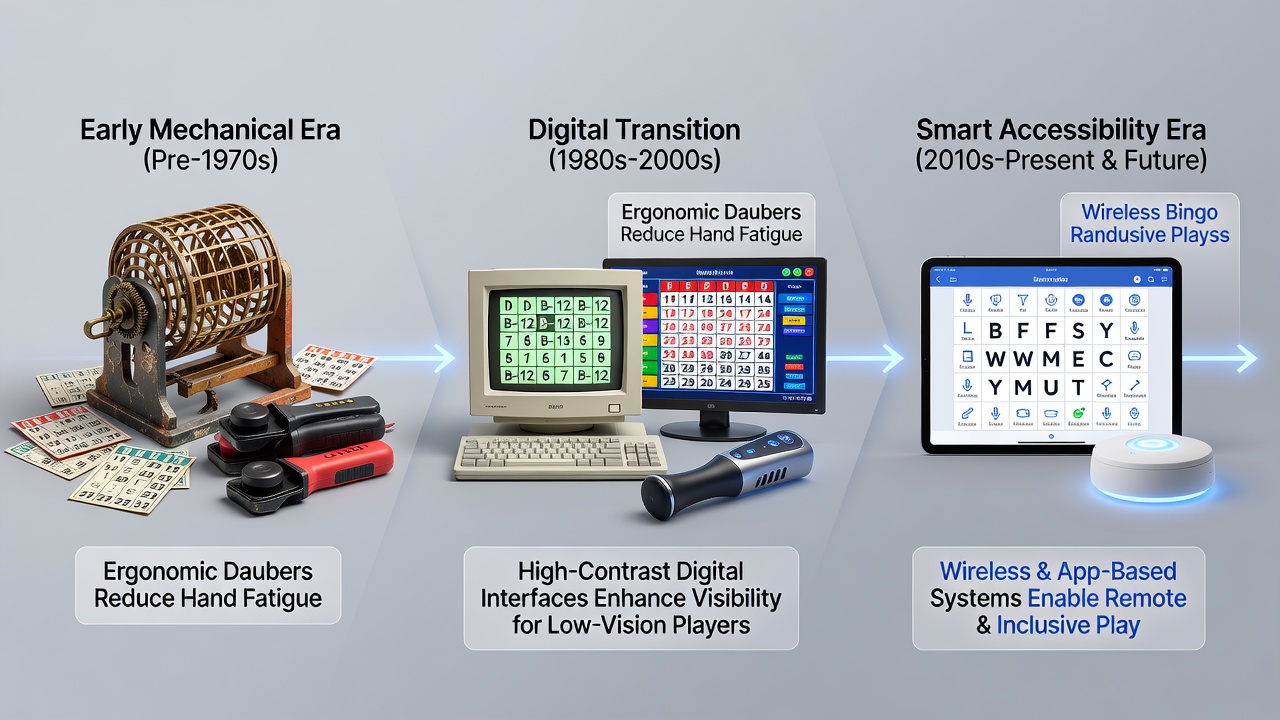
Bingo Equipment Evolution: Innovations in Manufacturing That Shaped Accessibility Standards Worldwide
Bingo equipment began with simple paper cards and manual ball cages made from wood or metal, yet manufacturing processes evolved rapidly through the twentieth century as materials science advanced and production techniques shifted toward precision plastics and automated assembly lines. These changes allowed for consistent card printing with larger fonts and clearer numbering systems that reduced visual strain for players across various age groups and ability levels. Data from industry reports indicate that by the 1980s many manufacturers had adopted injection-molding techniques for balls and cages, which produced uniform components resistant to wear while enabling scaled production that lowered costs for community halls and senior centers worldwide.
Transition to Durable Materials and Standardized Production
Manufacturers moved away from hand-stamped cards toward offset printing and later digital presses during the 1990s, which created opportunities for standardized layouts that aligned with emerging accessibility guidelines in multiple countries. Observers note that these production upgrades supported the introduction of high-contrast color schemes and perforated sheets that accommodated players with limited dexterity, since the materials held up better under repeated handling. Research conducted by academic institutions has shown that such manufacturing consistency contributed directly to the adoption of voluntary standards in North America and parts of Europe, where facilities began requiring equipment that met basic legibility thresholds for public events.
Plastic components replaced heavier metal alternatives in cages and shakers because the lighter weight reduced physical demands on operators and volunteers, and the shift coincided with broader regulatory attention to inclusive design principles. Figures from production data reveal that automated quality control systems introduced in the early 2000s further minimized defects in numbering and alignment, which benefited users who relied on tactile markers or magnifiers during play.
Electronic Systems and Random Number Generation
Electronic bingo devices emerged in the late twentieth century when circuit board manufacturing became affordable enough for widespread distribution in gaming venues. These systems replaced manual draws with computer-generated sequences that operated through sealed algorithms, and the transition allowed halls to install interfaces featuring adjustable volume controls, screen magnification, and audio readouts for number announcements. According to information published by the US Access Board, many of these hardware features aligned with Section 508 requirements for electronic equipment, which encouraged global suppliers to incorporate similar accommodations when exporting to markets with comparable disability legislation.
One study from a Canadian research center documented how touchscreen consoles manufactured with capacitive technology permitted operation without fine motor control, while integrated speakers delivered clear verbal cues that supported participants with visual impairments. Production lines incorporated modular designs so that individual units could be updated with new firmware rather than replaced entirely, which extended equipment lifespan and kept costs manageable for nonprofit organizations running regular sessions.
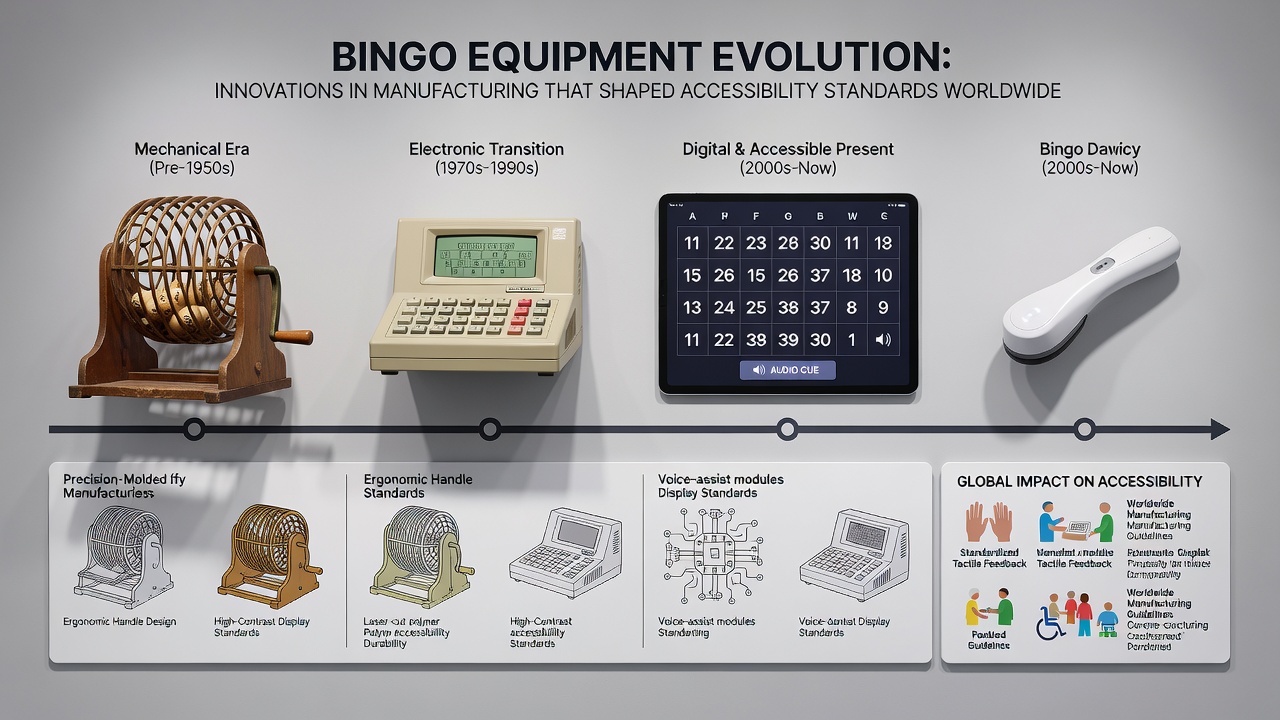
Global Accessibility Standards and Manufacturing Responses
International frameworks such as the United Nations Convention on the Rights of Persons with Disabilities prompted manufacturers to integrate universal design elements into bingo equipment during the 2010s. Facilities in Australia and the European Union began specifying products that complied with local equivalents of accessibility codes, and these requirements drove the development of braille overlays for card grids as well as vibration alerts that signaled winning combinations without relying solely on visual or auditory cues. Data compiled by trade associations show that suppliers who invested in adaptable tooling could serve multiple regulatory environments with minor variations in the same base product line.
Wireless connectivity added another layer when manufacturers began embedding Bluetooth modules into handheld devices, allowing synchronization with personal smartphones or tablets for real-time number tracking. This capability proved particularly useful in June 2026 when several regional suppliers unveiled updated models that included compatibility with emerging voice-assistant platforms, thereby expanding participation options for users who preferred hands-free operation. Production techniques involving 3D-printed custom grips and mounts further supported individual customization without disrupting mass manufacturing workflows.
Digital Platforms and Continued Refinements
Software platforms running on commercial tablets incorporated progressive enhancements such as scalable fonts, color inversion modes, and predictive text assistance for number entry, all of which stemmed from refinements in display manufacturing and touch sensor sensitivity. Researchers have observed that these digital tools reduced setup time for event organizers while meeting accessibility benchmarks established by bodies in Canada and Australia, where procurement policies increasingly favored vendors demonstrating compliance through third-party testing. The same manufacturing advancements that enabled thinner, brighter screens also supported longer battery life, which mattered for extended sessions in community settings.
Supply chains adapted by sourcing recyclable polymers and low-emission assembly methods, aligning equipment production with broader sustainability targets that overlapped with accessibility goals when lighter components eased transport and storage burdens. Observers note that these combined innovations allowed bingo programs to maintain operations in diverse environments, from urban senior centers to rural outreach programs, without sacrificing participation opportunities for individuals with varying physical or sensory needs.
Conclusion
Manufacturing developments in bingo equipment have progressively incorporated features that support wider participation through material durability, electronic interfaces, and modular adaptability. Standards bodies across different regions continue to influence production specifications, and ongoing refinements in digital components suggest further alignment between equipment capabilities and inclusive design expectations in the years ahead.